A Bazballing tragedy: The tactical forensics of an Ashes capitulation
“All sound and fury signifying nothing”.
The Macbeth-inspired quote was aptly left in the Facebook comments of a BBC Test Match Special post, detailing the third Test death rattle of England’s abominable Ashes campaign.
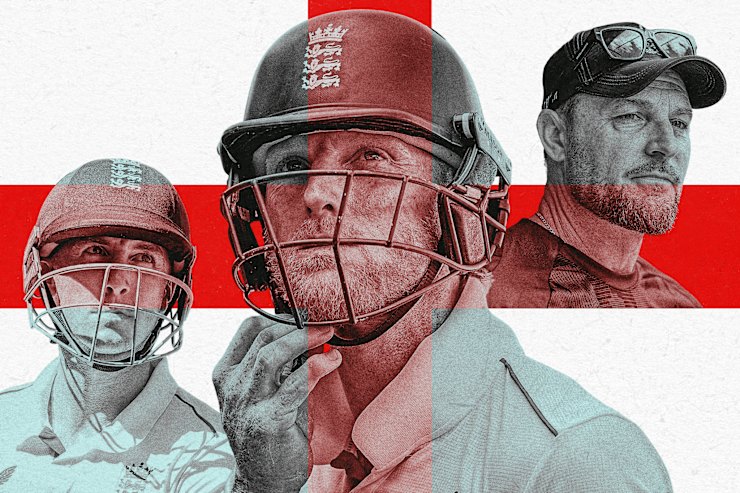
With a trio of England’s most iconic exports - Shakespeare, public broadcasting, and cricketing capitulations - a neat bow is tied on the 11 days required for the settling of a series hyped like no other, even with England’s admirable day five fight in Adelaide.
For four years, the Bazball era has built to this - “the biggest series of all our lives” as Brendon McCullum said in September. In a little more than half an Antipodean tour, the question now, after threatening to jag a fourth-innings miracle, is what might have been, with a little less heroic hubris.
Bazball without brains from the outset
Call it exposition (a last nod to Shakespeare), if you must. Amid all manner of hype and hyperbole, England touched down in Perth, with their vaunted Bazballing ways and accompanying vows to bat with abandon.
But for all the cushioning England’s recent years of flat decks and smaller grounds offer to their helter-skelter batting, Australian venues do not. The tourists’ commanding start with the ball in Perth was frittered away spectacularly with the bat.
Per CricViz, opener Ben Duckett began the first Test with an astounding record of leaving only 54 of the 2252 deliveries - or just 2.39 per cent - he has faced in his 34 Tests under McCullum.
A match-winner on his day, Duckett has fallen victim to a couple of five-star deliveries across the first three Tests. But his needless waft to Pat Cummins in Adelaide, with just 10 minutes to survive until lunch on day four, was galling. All the more so for the leave he practised as he wandered to the pavilion.
Harry Brook and Ollie Pope have become poster boys for rash shots and rushes of blood.
Brook said before the Adelaide Test he would temper his batting after dismissals from a pair of “shocking shots”. His second-innings attempt of a ramp and eventual demise to an ill-advised reverse sweep had Ricky Ponting fuming at “the worst batting I have ever seen”.
The 11 days Australia required to wrap up the Ashes equal the second fewest needed behind the 1921 series, which was sealed in just eight days.
But in terms of batting endurance, the post-war English of more than a century ago faced 3413 in losing their first three Tests (think of the over-rates!).
With a commitment to pushing the envelope - aside from a few Ben Stokes vigils, Joe Root’s century and a recalibration in Adelaide - England have only managed to face 2462 balls before coughing up the series.
And even when batting with more composure in the third Test, when keeper Jamie Smith finally finds form and hits a fluent day-five 60, he still couldn’t help himself.
Four Smith boundaries in as many balls against the new ball brought England to within 149 runs of a world-record run-chase to keep the series alive. They also brought Smith undone, as he backed himself for another thrashing of Mitchell Starc, but only tossed his wicket to Pat Cummins at mid-on.
For the umpteenth time, England wound up hoisted on their own petard.
Wrong horses for the wrong courses
Above all, England’s reckless and wasteful batting is why things have trended south so dramatically, so quickly, with the flow-on amplifying the tourists’ slide.
Will Jacks, an earnest batting all-rounder bearing part-time offspin, has performed admirably with the willow - which is why he was called up in Brisbane, to bolster the top-order’s failings.
But acting as England’s frontline spinner in a recalibrated attack, Stokes used Jacks sparingly - for just 11 of the 117 overs England bowled in Brisbane.
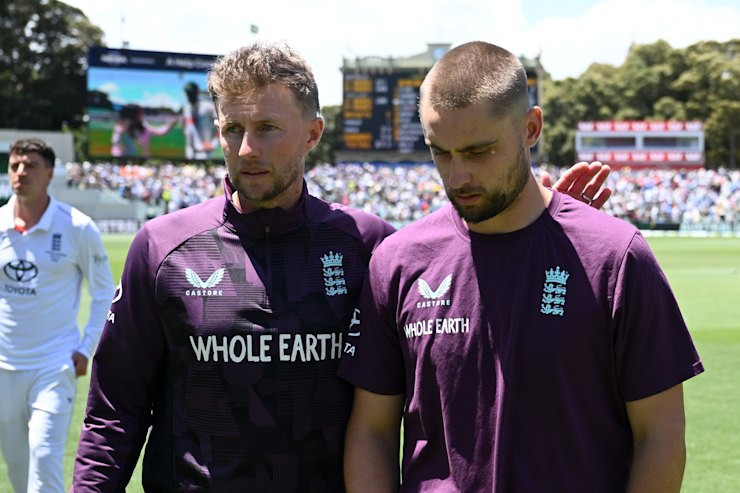
The punishment Jacks copped in Adelaide proved a reasonable explanation as Australia took him for 100-plus runs in each innings. But what more could be expected of a spinner with a first-class average of 43, who took just five wickets last county season?
Apparent No.1 spinner Shoaib Bashir sat in England’s team dugout all the while. Bashir’s building up for two years as England’s leading Ashes tweaker has yet to yield him a game.
Elsewhere, Mark Wood’s ruling out of the series with a knee injury, and Gus Atkinson’s drop-off in Brisbane led to Brydon Carse opening the bowling in Adelaide.
But again, Carse has done so with the new ball for just 20 overs in domestic cricket and repeatedly bowled too short. That could have been a hangover, though of the short-ball barrage he was charged with delivering in Brisbane before a marked change-up.
Either way, albeit with hindsight, Josh Tongue’s far straighter offerings than the rest of England’s attack should have seen him picked earlier in the series.
Where Australia’s contentious moves - dropping Nathan Lyon for Michael Neser, opening with Travis Head - have paid off in spades, England’s only compounded their woes.
Timid tactics: The anti-Bazball
After the first-innings blitz in Perth was turned around on the visitors by Travis Head, granted a scenario any captain would struggle to contain, Stokes’ field placements have at times bewildered.
Specifically, to the Australian tail in Brisbane. And again with the series on the line in Adelaide. For all the aggression and positivity of Bazball, England seemingly backed away from it when it was best-suited.
After England’s middle-order breakthroughs under lights at the Gabba, day three offered a chance to claw back into another contest. Instead, when Australia’s tail faced up to the new pink ball, Mitchell Starc found a spread field on offer, and happily farmed the strike of a 75-run, ninth-wicket partnership.
Boland, a genuine Test tailender, batted for 16 overs before lunch on day three. But with Starc able to manage the pair’s strike distribution relatively easily, Boland faced more than two balls an over just three times.
In all, the 182 runs from Australia’s tail took the Test away from England, with not all that much done to stop them.
Similarly, on day three in Adelaide, the tourists returned to the middle after lunch at 1-17, holding an 85-run lead. If ever you attack with ball and field, with the series on the line is surely the time.
Marnus Labuschagne began the session caught on the crease, yet with only one catching fielder behind the wicket. Jofra Archer ran in to Labuschagne and Travis Head with no gully and effectively a 50-over ring field, seemingly prioritising containment.
The latter happily built the bedrock of his 170 with more runs (39) scored behind point than anywhere else - the majority of those simple singles when England needed to go all out. And of course, when England’s tactics did deliver chances, their fielders were no sure things to hang onto them.
Five catches were spilled on one day in Brisbane, adding an extra 145 runs to Australia’s first-innings tally. Two dropped efforts from Harry Brook in Adelaide allowed Usman Khawaja and Head another 148 between them across the two innings.
In all, McCullum summed it quite succinctly standing on the boundary rope on Sunday afternoon, with Stokes echoing the sentiment in an 18-minute press conference shortly after.
“They’ve outplayed us with the bat, they’ve outplayed us with the ball, they’ve outplayed us in the field,” McCullum said.
And for all the sound, and fury of Bazball, it signifies nothing.